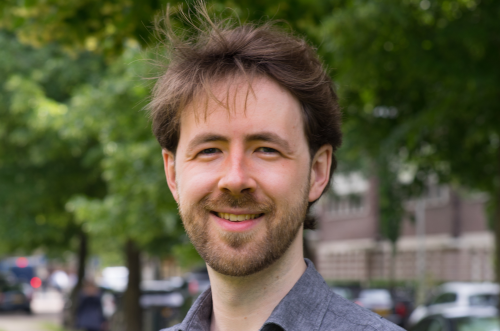
About me
I am a philosopher based at the Munich Center for Mathematical Philosophy (MCMP), where I hold a Humboldt Research Fellowship. I obtained my PhD from the Erasmus Institute for Philosophy and Economics (EIPE) at Erasmus University Rotterdam in 2023, under the supervision of Christopher Clarke, Conrad Heilmann, and Jack Vromen. Before turning to philosophy, I studied mathematics at Leiden University. In my free time, I enjoy singing, coding, and operating my server.
Research interests
I’m interested in almost everything, but I try to restrict myself to philosophy of causation, Bayesian epistemology, and philosophy of economics.
Much of my work concerns causation, both as a conceptual problem and as a methodological one. On the conceptual side, I am working on theories of actual causation based on causal models. On the methodological side, I research how causal relations are measured in economics and other social sciences. Things get interesting when it’s unclear what the correct causal relations to measure are – such as with inequality of opportunity and discrimination.
In Bayesian epistemology, I work on puzzles involving self-locating beliefs such as the Sleeping Beauty problem. I also have a paper on infinite frequency principles and one on the two-envelope paradox. I designed a course about probability puzzles, based on my conviction that thinking about puzzles is the best way to learn and study Bayesian epistemology.
The Journal of Mathematical Philosophy
In 2026, I co-founded a new open access journal with Jürgen Landes, the Journal of Mathematical Philosophy. We accept submissions in most areas of formal philosophy.
Project: The measurement of actual causation
I have submitted a research proposal to the Deutsche Forschungsgemeinschaft (DFG) titled “The Measurement of Actual Causation”. The project aims to lay the foundations for a theory of measuring prevalences (and other statistics) of actual-causal relations. While the methodological literature on causal measurement has focused almost exclusively on type causation — the relationship between variables or event types — many socially important questions concern actual causation, the relation between particular events that have already occurred. Measuring the prevalence of discrimination or evaluating the causal effectiveness of a past government program, I argue, are actual-causal measurement problems. The project addresses three interconnected problems: identifying the contexts in which actual causation is the appropriate target of measurement, developing model aptness conditions that make theories of actual causation sufficiently stable to support measurement, and analysing how existing causal inference methods can be adapted to estimate actual-causal quantities.